
Hiatal Hernia: Symptoms, Diagnosis & Treatment — The Complete Guide

Last updated: October 2, 2026
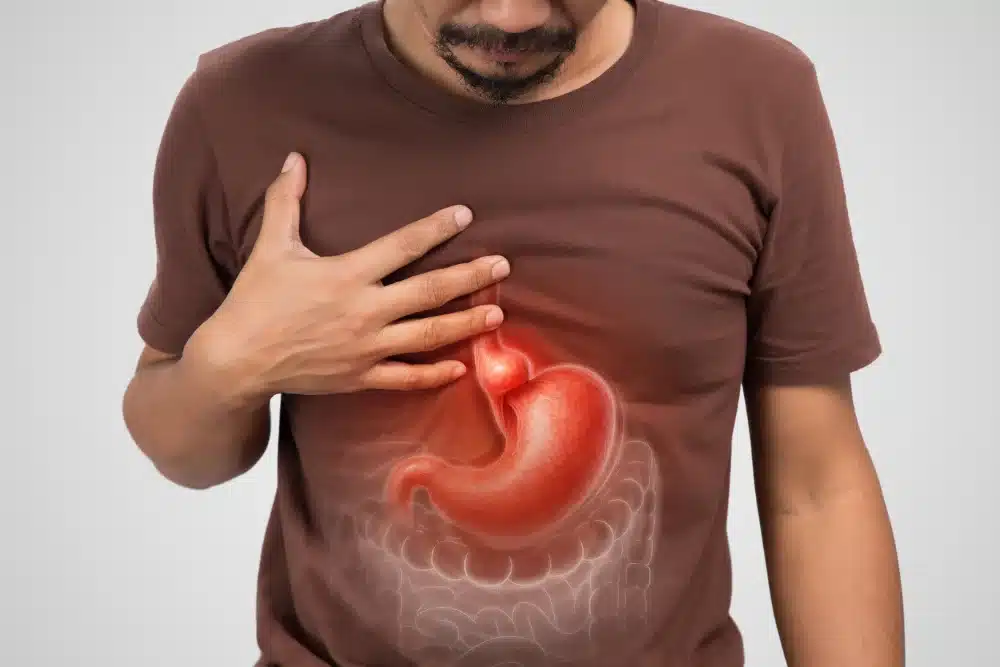
Heartburn is common. So is occasional indigestion after a heavy meal. A hiatal hernia becomes a different conversation when reflux keeps returning, swallowing becomes difficult, meals cause unusual pressure or fullness, or testing shows that part of the stomach has moved through the diaphragm.
Some hiatal hernias never cause enough trouble to require treatment. Others are closely tied to persistent GERD or create mechanical problems because of their size and position. Medication may be enough to control symptoms in one patient, while another may need surgery to restore the stomach and diaphragm to a more normal position.
Orange County Robotic General Surgery offers da Vinci robotic-assisted hiatal hernia repair for patients who are appropriate surgical candidates, serving Irvine, Newport Beach, and surrounding Orange County communities.
What Exactly Is a Hiatal Hernia?
The esophagus travels from the chest into the abdomen through a natural opening in the diaphragm called the hiatus. Normally, the stomach sits below that opening. A hiatal hernia forms when part of the stomach moves through it and into the chest.
Where the stomach moves, and how much of it moves, helps distinguish one type of hernia from another.
Sliding Hiatal Hernia
A Type I, or sliding hiatal hernia, is the most common form. The junction where the esophagus meets the stomach moves above the diaphragm, usually along with a small portion of the stomach.
Sliding hernias have a strong association with gastroesophageal reflux disease, or GERD. Moving the gastroesophageal junction above the diaphragm can interfere with mechanisms that normally help prevent stomach contents from flowing back into the esophagus.
That does not mean every sliding hernia causes reflux. Small hernias are often found during testing performed for another reason and may require no specific treatment.
Paraesophageal Hiatal Hernias
Types II, III, and IV are generally grouped under the term paraesophageal hernia. Their anatomy differs, but part of the stomach moves into the chest alongside the esophagus. Larger hernias may involve a substantial portion of the stomach and, in some cases, other abdominal organs.
Symptoms can come from the physical position of the stomach rather than reflux alone. Patients may notice pressure after meals, early fullness, difficulty swallowing, chest discomfort, or shortness of breath.
A large paraesophageal hernia can occasionally obstruct or twist the stomach. If that twisting compromises blood flow, urgent treatment may be necessary. Most paraesophageal hernias are not emergencies when they are diagnosed, however, and the decision to operate takes the patient's symptoms, anatomy, health, and surgical risk into account.
Why Do Hiatal Hernias Develop?
There is rarely one event that explains why a hiatal hernia formed. The tissues supporting the esophageal hiatus can loosen or change with age, and some people are more susceptible because of their anatomy or connective tissue.
Repeated increases in abdominal pressure may contribute as well. Chronic coughing and straining are examples. Body weight, pregnancy, previous surgery, and other individual factors may also influence the development of a hernia.
For treatment purposes, finding the exact cause is usually less important than understanding what the hernia is doing now.
Heartburn Is Only One Possible Symptom
Reflux is the symptom most closely associated with hiatal hernia, particularly the sliding type. Patients may describe burning behind the breastbone, sour or acidic material reaching the throat, or food coming back up after a meal.
Swallowing can change too. Food may seem slow to pass or feel as though it catches on the way down. Some people develop discomfort with swallowing, persistent throat symptoms, or upper abdominal pressure.
Larger paraesophageal hernias can present differently. A patient may become full after eating a small amount, feel uncomfortable pressure after meals, or experience shortness of breath. Chronic irritation within a large hernia can occasionally contribute to slow gastrointestinal blood loss and iron-deficiency anemia.
None of these symptoms belongs exclusively to hiatal hernia. Reflux disease can occur without a hernia, and chest discomfort or swallowing difficulty can have other causes. Testing is useful because symptoms alone do not tell the whole story.
A Note About Chest Pain
A known hiatal hernia should never become the automatic explanation for new chest pain.
Reflux and hiatal hernias can cause chest discomfort, but heart and lung conditions can produce similar symptoms. New, severe, or unexplained chest pain, particularly when accompanied by shortness of breath, sweating, fainting, or other concerning symptoms, requires prompt medical attention. Call 911 when symptoms may represent a medical emergency.
How Doctors Confirm a Hiatal Hernia
The workup is not identical for everyone. Someone with occasional reflux and a small hernia discovered incidentally does not necessarily need the same testing as a patient being considered for anti-reflux surgery.
When surgery is under consideration, the surgeon needs a detailed picture of the anatomy as well as information about reflux and esophageal function.
Upper Endoscopy
During an upper endoscopy, or EGD, a flexible camera is passed through the mouth to examine the esophagus and stomach. It can reveal inflammation, narrowing, ulcers, changes related to reflux, and other conditions that may explain symptoms.
A hiatal hernia may also be seen during endoscopy, although EGD is only one part of the evaluation.
Barium Swallow
A barium swallow provides a different view. The patient drinks contrast material while X-ray images are taken as it passes through the esophagus and stomach.
The study can show the position of the stomach, the configuration of a hiatal hernia, and how material moves through the esophagus. It is particularly useful when anatomy and swallowing need to be assessed together.
Esophageal Manometry
Manometry is about function rather than appearance. It measures pressure and muscle coordination as the esophagus moves swallowed material toward the stomach.
Why does that matter before surgery? An anti-reflux procedure changes the area where the esophagus enters the stomach. Knowing how well the esophagus already moves food can influence the operative plan and help identify motility disorders that could otherwise be mistaken for reflux or hernia symptoms.
Reflux Monitoring
Ambulatory pH testing measures reflux over an extended period. A wireless system such as Bravo uses a small capsule attached to the esophageal lining, while other reflux studies use a thin catheter.
Objective reflux testing can be valuable when the relationship between a patient's symptoms and GERD is uncertain or when documentation of reflux is needed before an anti-reflux procedure.
A patient does not automatically need endoscopy, barium imaging, manometry, and pH monitoring simply because a hiatal hernia has been found. Testing should answer a clinical question and is selected accordingly.
Does Every Hiatal Hernia Need Surgery?
No. In fact, many do not.
A small sliding hernia with manageable reflux may be treated much like GERD without a hernia. Dietary changes, weight management when appropriate, adjustments to eating habits, and acid-suppressing medications can provide adequate symptom control.
Proton pump inhibitors and H2-receptor blockers reduce stomach acid. They do not close the opening in the diaphragm, but that does not make medical treatment a temporary or inferior solution. If the patient's symptoms are controlled and there is no other reason to repair the hernia, surgery may offer little advantage.
The conversation changes when symptoms remain troublesome despite appropriate treatment, significant regurgitation persists, medication is poorly tolerated, or the hernia itself is producing mechanical problems. Larger paraesophageal hernias require particular attention to anatomy, symptoms, and the patient's overall health.
What Does Hiatal Hernia Surgery Repair?
The basic operation sounds straightforward: return the stomach to the abdomen and repair the enlarged opening in the diaphragm. The details are more involved.
After the herniated stomach is reduced, the surgeon works around the esophagus and hiatus and repairs the diaphragmatic opening, typically with sutures. A hernia sac may also be dissected as part of the operation.
If GERD is an important part of the patient's condition, an anti-reflux procedure may be performed during the repair.
Nissen and Toupet Fundoplication
Fundoplication uses the upper portion of the stomach, called the fundus, to reinforce the barrier at the lower end of the esophagus.
A Nissen fundoplication creates a complete 360-degree wrap. A Toupet is a partial posterior wrap, commonly described as approximately 270 degrees.
A full wrap is not automatically better than a partial one. Preoperative findings, esophageal motility, swallowing function, anatomy, and the surgeon's assessment help guide the choice.
Is Mesh Necessary?
Not for every repair.
Surgeons may consider mesh reinforcement when characteristics of the hiatal defect or surrounding tissue make additional support appropriate. Mesh materials and techniques differ, and their use at the hiatus remains a case-specific decision.
It would therefore be inaccurate to describe mesh as a routine component of robotic hiatal hernia repair or to promise that using it prevents recurrence.
Robotic vs. Laparoscopic Hiatal Hernia Repair
Both robotic-assisted and conventional laparoscopic surgery allow a hiatal hernia to be repaired through small incisions rather than the larger incision used for an open operation.
The difference is mainly in the surgical platform.
With conventional laparoscopy, the surgeon operates using long laparoscopic instruments while viewing the surgical field on a monitor. The da Vinci robotic platform provides magnified three-dimensional visualization and articulated instruments controlled by the surgeon from a console.
Those wristed instruments can be useful when dissecting and suturing around the esophagus and diaphragm, where the working space can be limited.
The robot does not perform the surgery, make decisions, or operate independently. The surgeon remains in control throughout the procedure.
Robotic technology also should not be presented as a guarantee of a faster recovery, less pain, or a lower recurrence rate than laparoscopy. The patient's anatomy, complexity of the hernia, operative technique, health, and experience of the surgical team all contribute to the outcome.
When Is Open Surgery Used?
Minimally invasive surgery is commonly used for hiatal hernia repair, but open surgery remains appropriate in selected situations.
A larger incision may be necessary because of complex anatomy, previous operations, an emergency, or findings encountered during surgery. The surgeon chooses the approach according to what can be performed safely and effectively for that patient.
Open repair generally involves a more substantial recovery than minimally invasive surgery, but it should not be framed as an outdated or inferior operation when there is a sound reason to use it.
What Is Recovery Like After Robotic Hiatal Hernia Repair?
The first part of recovery often focuses less on the incisions than on allowing the repaired area around the esophagus and stomach to heal.
Patients are generally encouraged to begin walking early. Discharge may occur the day of surgery or after a hospital stay, depending on the extent of the operation and how recovery is progressing.
Swallowing can feel different for a period after surgery because swelling develops around the repaired hiatus. For that reason, postoperative eating usually advances in stages rather than returning immediately to a regular diet.
A patient's return to work and exercise depends on more than the word “robotic.” The complexity of the repair, general health, type of work, and progress during follow-up all matter. The surgeon provides activity and lifting restrictions for the individual operation.
Eating After Hiatal Hernia Surgery
Most patients should expect their diet to change temporarily.
Early instructions may begin with liquids and progress to softer foods as swallowing becomes more comfortable. Patients are often advised to take small bites, chew thoroughly, eat slowly, and avoid rushing through meals while the area heals.
There is no universal day when everyone should return to solid food. A patient who has had a large paraesophageal hernia repaired may progress differently from someone undergoing a less extensive operation.
Severe or worsening difficulty swallowing, repeated vomiting, or inability to maintain adequate hydration should be reported to the surgical team.
Will Surgery Get Rid of Acid Reflux?
For a well-selected patient with documented GERD, hiatal hernia repair combined with an appropriate anti-reflux procedure can provide substantial symptom improvement.
That is different from promising that GERD will disappear permanently.
Some patients are able to reduce or discontinue acid-suppressing medication after surgery. Others may need medication again later or continue to have symptoms that require evaluation. Hernias and reflux can also recur after an initially successful repair.
Preoperative testing is important partly for this reason. Surgery is more likely to address the right problem when the surgeon understands the anatomy, confirms relevant reflux when necessary, and knows how the esophagus functions before operating.
Why See a Surgeon for Persistent Hiatal Hernia Symptoms?
The value of a surgical consultation is not simply finding out whether robotic surgery is available.
A surgeon can review the hernia itself alongside the patient's symptoms and previous treatment. For someone whose main complaint is reflux, that may mean deciding whether the hernia is clinically important at all. With a larger paraesophageal hernia, the discussion may focus more on swallowing, pressure after eating, anemia, obstruction, or other mechanical effects.
Dr. Abtin Khosravi evaluates patients with hiatal hernias at Orange County Robotic General Surgery. When repair is appropriate, minimally invasive robotic-assisted surgery is one approach that may be considered. The operative plan is based on the findings rather than choosing a technique before the evaluation.
Frequently Asked Questions
Hiatal Hernia Evaluation in Orange County
Living with reflux does not necessarily mean living with a hiatal hernia that needs surgery. Likewise, finding a hernia on an endoscopy or imaging study does not automatically establish what should happen next. The anatomy has to make sense alongside the symptoms.
For patients whose findings do point toward repair, Orange County Robotic General Surgery offers robotic-assisted hiatal hernia surgery as a minimally invasive option. Dr. Khosravi can review the existing testing, determine whether additional evaluation is useful, and discuss the surgical and non-surgical choices that fit the case.
Contact Orange County Robotic General Surgery to schedule a hiatal hernia consultation and have your symptoms, testing, and treatment options reviewed together.
This guide is intended for general medical education. It does not replace an individual examination or medical advice. Treatment recommendations, recovery, and surgical outcomes vary according to the patient and procedure.